Newsletter - February 2025
Wild Birds Unlimited - San Diego Events:
February Events:
- Every Saturday in February – Hawk Watch: Suggested arrival 9:30 AM, starts at 10:00 AM (rain or shine): 8528 Highland Valley Rd. Ramona, CA 92065
- Hawk Watch is an informative educational Biologists Talk and Q&A with falconry or ambassador raptors for you to see up close and personal! Details Here
- As Wild Birds Unlimited - San Diego will be at Hawk Watch each Saturday, no in-store events will take place in February. If you attend, be sure to stop by our booth and say hello!
- February 26 to March 2 – San Diego Bird Festival Details Here
- As Wild Birds Unlimited - San Diego will be a sponsor of this event, there will not be any events on March 1st. If you attend the festival, be sure to stop by our booth and say hello!
Quote of the Month:
“A bird does not sing because it has an answer, it sings because it has a song.” - Maya Angelou
Spotlight:
Latest Information on Avian Flu
You may have heard about avian influenza (or “bird flu”) and the development of this disease in North America. At this point in time, while some sources have recommended taking down bird feeders and bird baths, other wildlife and health experts say you may continue feeding the birds. Here are the facts as we know them today.
Since Fall of 2021, a highly pathogenic avian influenza (HPAI H5N1) has been detected in numerous outbreaks in North America. It is a naturally-occurring virus especially prevalent among wild aquatic birds such as ducks, geese and shorebirds and has been shown to affect commercial and backyard poultry with high mortality.
The Cornell Lab of Ornithology has created a webpage that collects current Avian Flu research and answers commonly asked questions about bird feeding and avian flu.
They also state, “There is currently very low risk of an outbreak among wild songbirds, and no official recommendation to take down feeders unless you also keep domestic poultry, according to the National Wildlife Disease Program.”
The US Department of Agriculture further states, “HPAI viruses and the illness they cause are not commonly found in wild [song] birds…removing backyard feeders is not something USDA specifically recommends to prevent avian influenza unless you also take care of poultry.”
In addition, the US Centers for Disease Control and Prevention currently deems H5N1 to be of low human health risk.
To practice the hobby of bird feeding safely and to ensure the birds’ overall health, it is always recommended you clean your bird feeders regularly with a 10 % bleach solution (one part bleach to nine parts water). Here is a great video that shows you how.
We get questions all the time about how often to clean, so here's a simple breakdown of timing for each type of item:
- Baths: Replace water daily by rinsing and scrubbing any debris before refilling. Sanitize every two to three weeks with a 10% bleach solution.
- Tube & Hopper Feeders: Clean weekly with soap and hot water, then sanitize with 10% bleach solution every four weeks if not sooner depending on how busy the feeder gets.
- Hummingbird Feeders: Replace nectar every three to four days in mild weather or more often in hotter weather; daily during the summer. Rinse and scrub any debris, especially around the ports before refilling. Our line of WBU High Perch feeders can be placed in the dishwasher for easy cleaning, otherwise sanitize with 10% bleach solution every four weeks if not sooner.
- EcoClean feeders and accessories: Our exclusive WBU EcoClean™ products feature a patented, silver-based antimicrobial technology called Agion, built into select components. This inhibits the growth of damaging bacteria, mold, mildew, fungus and other microbes on the treated product components, meaning you only need to use a hot water rinse and maybe a little soap for tougher debris. Super easy!
Pro Tip: Most folks stress about cleaning their feeders and it can be hard to find the time. If you get an additional feeder, you can just put aside the dirty one to clean when you have time and you'll then have a fresh, clean, dry feeder available to swap-out with the dirty one without the stress of having to do it all at once!
Wild Birds Unlimited Recommends Responsible Birdfeeding
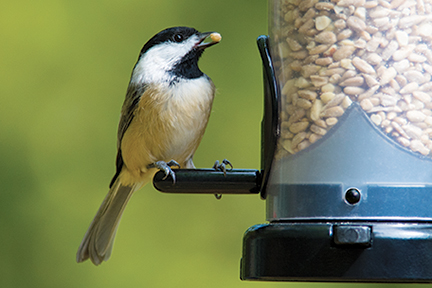
It is always important to provide a safe feeding environment for the birds. Responsible bird feeding techniques play a crucial role in helping to prevent the spread of disease among bird populations. The following strategies will help you to improve the health and safety of your birds.
Healthy Bird Feeding Techniques
• Birdfeeders with cracks and crevices are difficult to sanitize and should not be used. Replace them with new feeders.
• Focus on using only feeders that can be easily cleaned.
• Limit the amount of seed provided in feeders to only the amount your birds will consume in one or two days.
• Give the birds more space. The addition of more feeders, spread far apart from one another, will reduce the crowding of birds that is often found around a single feeder. This will reduce the birds’ stress and the potential for disease transmission between healthy and sick birds.
• Periodically, move feeders to new locations in the yard to avoid the build-up of waste materials and feces.
• Clean feeders, birdbaths and all hardware with a 10% bleach (one part bleach to nine parts water) solution. Rinse thoroughly and allow to completely dry before refilling feeders.
• Be sure to keep the ground below and around the feeders clean. Rake up and discard seed debris and bird droppings on regular basis.
• Store all birdseed in rodent- and insect-proof containers to avoid contamination.
• Always discard any seed that has become wet, moldy or foul smelling.
• Avoid handling sick birds and always wash your hands with soap and water after filling bird feeders.
|
Bird of the Month: Yellow-Rumped Warbler
 Yellow-rumped warbler, Santee Lakes, Santee, CA Yellow-rumped warbler, Santee Lakes, Santee, CA
Fun Facts About The Yellow-Rumped Warbler:
- Identification: Yellow-rumped Warblers (Setophaga coronata) are fairly large, full-bodied warblers with a large head, sturdy bill, and long, narrow tail. In summer, both sexes are a smart gray with flashes of white in the wings and yellow on the face, sides, and rump. Males are very strikingly shaded; females are duller and may show some brown. Winter birds are paler brown, with a bright yellow rump and usually some yellow on the sides. They are also lovingly referred to as “butter butts”.
- Flight Characteristics: They exhibit a distinctive flight pattern, often fluttering out from perches to catch insects in mid-air, displaying their characteristic yellow rump and white tail patches, which can be a helpful identification feature for bird watchers.
- Vocalizations: Their song is a loose, musical trill composed of 4–7 syllables, and their call note is a sharp "check" or "chip," often heard during foraging or flight.
- Variations: There are two main subspecies groups: the "Myrtle" Warbler, found primarily in the eastern United States and Canada, and the "Audubon's" Warbler, found in the western United States. They differ slightly in plumage and throat color, with the Myrtle having a white throat and the Audubon's a yellow throat.
- Seasonal Plumage Changes: In spring, they undergo a molt that transforms their plumage into a striking combination of bright yellow, charcoal gray, black, and white, making them more conspicuous during the breeding season.
- Dietary Adaptability: Unlike many other warblers, Yellow-rumped Warblers can digest the waxes found in bayberries and wax myrtles. This unique ability allows them to winter farther north than other warbler species, sometimes as far north as Newfoundland.
- Foraging Versatility: They are among the most versatile foragers of all warblers. Beyond gleaning insects from leaves, they have been observed catching flying insects in mid-air, picking at insects on washed-up seaweed, skimming insects from the surface of water bodies, extracting them from spiderwebs, and even grabbing them off piles of manure.
- Diet in Urban Areas: In urban settings like San Diego, Yellow-rumped Warblers adapt their diet to available resources. They often feed on berries from ornamental plants and can be seen gleaning insects from garden shrubs and trees, demonstrating their dietary flexibility.
- Winter Feeding Habits: In addition to berries, they have been observed sipping the sweet honeydew excreted by aphids, showcasing their opportunistic feeding behavior during the non-breeding season.
- Aggressive Interactions: When foraging with other warbler species, Yellow-rumped Warblers often assert dominance over Pine and Blackburnian Warblers but are more tolerant of Palm, Magnolia, and Black-throated Green Warblers.
- Sex-based Foraging Differences: Males tend to forage higher in trees compared to females, possibly reducing food competition between sexes.
- Attraction to Feeders: In backyard settings, especially during migration and winter, they may visit feeders offering sunflower seeds, raisins, suet, mealworms and peanut hearts.
- Migration Patterns: Their migratory behavior varies, with some populations migrating long distances to Central America, while others, especially along the Pacific Coast, may remain near their breeding areas year-round. They typically migrate at night, using skylight polarization for navigation at dusk.
- Abundant Winter Visitor: The Yellow-rumped Warbler is among San Diego County's most abundant winter visitors. They are commonly observed from the coast up to elevations of about 2,500 feet. They typically arrive in the fall and depart in the spring. Their presence is most noticeable from October through April, aligning with their migratory patterns to exploit the milder winter climate and food availability in Southern California.
- Breeding Status: While primarily winter visitors, there have been rare instances of Yellow-rumped Warblers breeding in San Diego County. These occurrences are confined to coniferous forests on the county's highest mountains, indicating a limited and recent expansion of their breeding range.
- Nesting Habits: Females build cup-shaped nests on the horizontal branch of conifer trees using materials like twigs, pine needles, grasses, and rootlets, often lining them with fine hair and feathers. Occasionally nests are built in a deciduous tree such as a maple, oak or birch. Nests are typically located 4 to 50 feet above ground.
- Reproductive Details: They usually lay 4–5 eggs per clutch. The female incubates the eggs for 12 to 13 days, and after hatching, the nestlings are brooded for an additional 10 to 14 days before fledging.
- Predation and Survival: Predators of Yellow-rumped Warblers include birds of prey, such as hawks and owls, as well as snakes and mammals that may prey on eggs and nestlings. Their agile flight and tendency to forage in dense foliage help them evade many predators.
- Role in Ecosystem: By consuming large quantities of insects, especially during breeding season, they help control insect populations. Their consumption of berries also aids in seed dispersal for various plant species.
- Conservation Status: They are common and widespread, and populations have held steady from 1966 to 2019, according to the North American Breeding Bird Survey. Partners in Flight estimates a global breeding population of 170 million and rates them 6 out of 20 on the Continental Concern Score, indicating a species of low conservation concern.
- Longevity Record: The oldest recorded Yellow-rumped Warbler was a female, at least 10 years old, recaptured and released in Wyoming in 2006.
|
|
What’s happening in San Diego:
San Diego Bird Alliance (formerly San Diego Audubon Society)
- Love your Wetlands Day
- Date: February 1, 2025
- Time: 9:00 AM – 2:00 PM
- Location: UCSD Kendall-Frost Marsh, 2055 Pacific Beach Dr., San Diego
- Event Link
- Volunteer for Love your Wetlands Day
- Date: February 1, 2025
- Time: 9:00 AM – 2:00 PM
- Location: UCSD Kendall-Frost Marsh, 2055 Pacific Beach Dr., San Diego
- Event Link
- Community Restoration: California Least Tern, Dune Defenders
- Wander the Wetlands: Birding Outing:
- Date: February 8, 2025
- Time: 9:00 AM – 11:00 AM
- Location: Kendall-Frost Marsh, Crown Point Dr., San Diego
- Event Link
- Community Restoration: Otay Valley Regional Park
- Date: February 8, 2025
- Time: 9:30 AM – 1:00 PM
- Location: Otay Valley Regional Park, 400 Palm Ave, Chula Vista
- Event Link
- Art and Wellness at Anstine-Audubon Nature Preserve
- Date: February 8, 2025
- Time: 11:00 AM – 2:00 PM
- Location: Anstine-Audubon Nature Preserve, 2437 Hutchison St., Vista
- Event Link
- Birding Outing: South San Diego Bay Wildlife Refuge and the SoCal Salt Works
- Date: February 9, 2025
- Time: 9:00 AM – 1:00 PM
- Location: South Bay Salt Works
- Event Link
- Bird Photography Club: Photo Stroll at Torrey Pines State Reserve
- Date: February 15, 2025
- Time: 7:00 AM – 10:00 AM
- Location: Torrey Pines
- Event Link
- Queer Hikes: Sweetwater Interpretive Train
- Date: February 15, 2025
- Time: 8:00 AM – 11:00 AM
- Location: 12155 Campo Rd, El Cajon
- Event Link
- Birding Outing: Famosa Slough
- Date: February 15, 2025
- Time: 9:00 AM - 11:00 AM
- Location: At the sign on Famosa Blvd. north of the Rialto St. , San Diego
- Event Link
- Birding Outing: La Jolla Sea Watch and Rocky Shores
- Date: February 16, 2025
- Time: 7:30 AM – 10:30 PM
- Location: Point La Jolla
- Event Link
- Birding Outing: Marian Bear Open Space with Anitra Kaye
- Date: February 22, 2025
- Time: 8:00 AM – 11:00 AM
- Location: Marian Bear Open Space, 5544 Regents Rd., San Diego
- Event Link
- Wander the Wetlands: Work Party
- Date: February 22, 2025
- Time: 9:00 AM – 11:00 AM
- Location: 2055 Pacific Beach Drive, San Diego
- Event Link
- Art and Wellness at Silverwood Wildlife Sanctuary
- Date: February 22, 2025
- Time: 11:00 AM – 2:00 PM
- Location: 13003 Wildcat Canyon Road, Lakeside
- Event Link
Palomar Audubon Society
- Salton Sea Birding Adventure
- Date: January 31 – February 2, 2025
- Time: 5:00 PM (Jan 1) – 2:00 PM (Feb 2)
- Location: Salton Sea
- Event Link
- Batiquitos Lagoon Bird Walk
- Date: February 1, 2025
- Time: 8:00 AM – 11:00 AM
- Location: 7380 Gabbiano Lane, Carlsbad
- Event Link
- Guajome Regional Park Field Trip
- Date: February 8, 2025
- Time: 8:00 AM – 11:30 AM
- Location: Guajome Regional Park, 3003 Guajome Lake Rd, Oceanside
- Event Link
- Dos Picos County Park & Rangeland Road Field Trip
- Date: February 15, 2025
- Time: 8:00 AM – 11:30 AM
- Location: Dos Picos County Park & Rangeland Road, 17953 Dos Picos Park Road, Ramona
- Event Link
- San Joaquin Wildlife Sanctuary Field Trip
- Date: February 22, 2025
- Time: 8:00 AM – 11:30 AM
- Location: San Joaquin Wildlife Sanctuary, 45 Riparian view, Irvine
- Event Link
Buena Vista Audubon Society
- Whelan Lake Bird Sanctuary Walk
- Date: February 1, 2025
- Time: 8:00 AM – 10:00 AM
- Location: Whelan Lake, Oceanside
- Event Link
- Rancho Carrillo Trail
- Date: February 7, 2025
- Time: 7:30 AM – 8:30 AM
- Location: Rancho Carrillo Trail, Carlsbad
- Event Link
- El Corazon Garrison Creek
- Date: February 12, 2025
- Time: 8:00 AM – 9:00 AM
- Location: El Corazon Garrison Creek, Oceanside
- Event Link
- Birding with Barbara
- Date: February 15, 2025
- Time: 8:00 AM – 10:00 AM
- Location: 95 N Vulcan Ave., Encinitas
- Event Link
- Preschool Nature Storytime at the Nature Center
- Date: February 24, 2025
- Time: 10:00 AM - 11:00 AM
- Location: Buena Vista Audubon Nature Center, Oceanside
- Event Link
San Dieguito River Valley Conservancy
- Creekside Critters Featuring Helen Woodward Animal Center
- Date: February 1, 2025
- Time: 11:00 AM – 12:00 PM
- Location: Del Mar Branch Library, 1309 Camino Del Mar, Del Mar
- Event Link:
- Yoga at the Birdwing
- Dates: February 2, 8 and 16, 2025
- Time: 10:00 AM – 11:00 AM
- Location: Birdwing Open Air Classroom, 15737 San Andres Dr, Del Mar
- Event Link
- Natural Impressions: Art in Nature – “Octopi My Heart” Crocheting
- Date: February 9, 2025
- Time: 10:00 AM – 12:00 PM
- Location: San Dieguito Lagoon Staging Area, 15648 San Andres Dr., Del Mar
- Event Link
- Connecting Creatures, Climate and Communities – 2nd Wednesday Speaker Series
- Date: February 12, 2025
- Time: 6:30 PM – 8:00 PM
- Location: Del Mar Town Hall, 1050 Camino Del Mar, Del Mar
- Event Link
- Gonzales Canyon Habitat Restoration
- Dates: February 22, 2025
- Time: 9:00 AM – 11:00 AM
- Location: 13655 Sword Way San Diego, CA
- Event Link
San Elijo Lagoon Nature Collective
- Discovery Tour
- Date: February 1, 2025
- Time: 10:00 AM – 11:30 AM
- Location: San Elijo Lagoon, Nature Center Loop Trail, 2710 Manchester Ave., Cardiff-by-the-Sea
- Event Link
- San Elijo Lagoon Restoration + Monitoring Presentation:
- Date: February 4, 2025
- Time: 6:00 PM – 7:00 PM
- Location: Zoom
- Event Link
- Wildlife Tour
- Date: February 8, 2025
- Time: 9:00 AM – 11:00 AM
- Location: San Elijo Lagoon, Cardiff-by-the-Sea
- Event Link
- Volunteer Restoration Event:
- Date: February 12, 2025
- Time: 9:00 AM – 12:00 PM
- Location: TBD
- Event Link
- Volunteer Restoration Event:
- Date: February 15, 2025
- Time: 9:00 AM – 12:00 PM
- Location: TBD
- Event Link
Living Coast Discovery Center
- Bilingual Sweetwater Safari Hike
- Date: February 1, 2025
- Time: 11:30 AM – 12:30 PM
- Location: Living Coast Discovery Center, 1000 Gunpowder Point Drive, Chula Vista
- Event Link
- Otay Valley Regional Park Bug Hike
- Date: February 9, 2025
- Time: 9:00 AM – 11:00 AM
- Location: 2155 Beyer Blvd, San Diego
- Event Link
- Sweetwater Safari Hike
- Rice Canyon Train Plant Hike (Bilingual English/Spanish)
- Date: February 22, 2025
- Time: 9:00 AM – 11:00 AM
- Location: 1242 Cima Del Rey, Chula Vista
- Event Link
Tijuana Estuary
- Love your Wetlands Day
- Date: February 1, 2025
- Time: 9:00 AM – 2:00 PM
- Location: UCSD Kendall-Frost Marsh, 2055 Pacific Beach Dr., San Diego
- Event Link
- Nature Walk: An Eye-Opening Experience Without Sight
- Date: February 1, 2025
- Time: 11:00 AM – 12:00 PM
- Location: Tijuana Estuary Visitor Center, Imperial Beach
- Event Link
- Bird Walk
- Dates: February 2 and 16, 2025
- Time: 10:00 AM – 11:00 AM
- Location: Tijuana Estuary Visitor Center, Imperial Beach
- Event Link
- Nature Walk
- Date: February 8, 2025
- Time: 11:00 AM – 12:30 PM
- Location: 5th Street & Iris Avenue, 5th St & Iris Ave, Imperial Beach
- Event Link
- Explore the Colors of the Estuary: A Community Art Therapy Experience
- Date: February 9, 2025
- Time: 2:00 PM – 3:30 PM
- Location: Tijuana Estuary Visitor Center, Imperial Beach
- Event Link
- Nature Book Club
- Date: February 22, 2025
- Time: 10:00 AM - 11:30 AM
- Location: Tijuana Estuary Visitor Center, Imperial Beach
- Event Link
- Nature Walk
- Dates: February 22, 2025
- Time: 11:00 AM – 12:00 PM
- Location: Tijuana Estuary Visitor Center, Imperial Beach
- Event Link
|
|
|