Newsletter - March 2025
Wild Birds Unlimited - San Diego Events:
February Events:
- February 26 to March 2 – San Diego Bird Festival Details Here
As Wild Birds Unlimited - San Diego will be a sponsor of this event, there will not be any events on March 1st. If you attend the festival, be sure to stop by our booth in the Bayview Room and say hello!
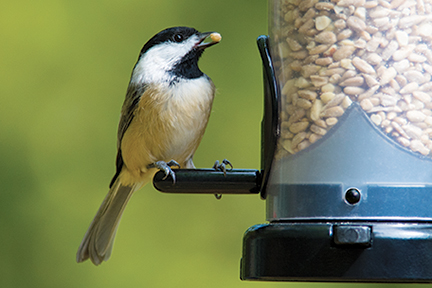
- Saturday, March 15, 2025 - Top Ten Local Backyard Birds
Join us at 10 A.M. at the Scripps Ranch WBU store for a special presentation by owner Dan Payne. Learn about the top ten most frequently seen birds at our local backyard feeders.
We'll share a few fun facts about each bird and let you know what you can do to attract them to your own backyard.
Bring a friend! Spreading the joy of bird feeding is one of our biggest goals. The more people we can bring to the hobby helps increase advocacy for the birds and the conservation of their habitat.
Quote of the Month:
“When you have seen one ant, one bird, one tree, you have not seen them all.” – E. O. Wilson
Spotlight:
Lights Out, San Diego!
The following information was taken from the San Diego Bird Alliance website. We encourage you to visit the website page with the full details HERE.
Lights Out, San Diego! is a campaign to build awareness about how light pollution impacts migrating birds and other wildlife. San Diego is located on the Pacific Flyway and every year during the fall and spring migration seasons, millions of birds fly over San Diego every night.
Through the Lights Out, San Diego! campaign, we encourage everyone to turn off non-essential lighting from the hours of 11 p.m to 6 a.m during the migration season to provide darker skies for these nocturnal migrants. Will you take the Lights Out, San Diego! Pledge?
Click here to take the pledge
WHY LIGHTS OUT?
More than 80% of North America’s migrating birds migrate at night, and San Diego is privileged to see so much of this migration. Our beautiful county is on the Pacific Flyway—we are right along the path that many different species of birds use to head south in the fall and come back north in the spring.
Light pollution can disrupt migration as it can cause:
- Disorientation - Birds are drawn to the light
- Exhaustion - Birds can find themselves flying in circles over and over
- Building collisions - From their encounters with brightly lit building
- Delays in migrations - Some birds slow down their flight in brightly-lit cities
- Grounding of seabirds - From landing in light-polluted areas and being unable to fly again.
Researchers have studied the impact of light pollution on many species of birds, like:
WESTERN SNOWY PLOVER
The Western Snowy Plover avoids areas with light pollution, most likely because increased light can make them more visible to predators. Just half the brightness of the moon in a clear sky can disrupt the plovers’ resting sites.
EUROPEAN CURLEW
European Curlew were found to take off sooner in the presence of a predator when more artificial light was present. Light pollution has the potential to disrupt predator-prey relationships in all kinds of unknown ways, perhaps even for our own Long-Billed Curlew.
MANX SHEARWATER
Artificial light has been observed to attract Manx Shearwater fledglings, but repel adults. The potential consequences for fledglings and adults are different, but disastrous; fledglings could become grounded in light polluted areas, while adults could abandon their nesting burrows.
INSECTIVOROUS BIRDS
Because light pollution attracts insects, it has been shown to attract insectivorous and omnivorous birds as well, such as the Western Bluebird. As insects are more available in areas of light pollution, it can lead to a decrease in the diversity of what many birds eat.
HOW SERIOUS IS THE PROBLEM?
According to the US State of the Birds report for 2022 nearly 1 in 4 breeding birds have been lost from the US and Canada in the past 50 years. This is a staggering loss of 3 billion birds!
It has been reported that about 365 million to 988 million birds die every year in the US due to collisions with buildings. Of these deaths 56% occur at low-rises (4 to 11 stories) and 44% at residences.
In 2017 in just one night 400 migratory birds were killed by just one skyscraper in Texas.  WHAT CAN YOU DO? WHAT CAN YOU DO?
Sign up to be a part of Lights Out, San Diego! and help minimize light pollution so we can reduce bird mortality as they fly over San Diego in the coming months!
Spring Migration Dates
- Full Spring Migration Period: March 1 – June 15
- Critical Spring Peak Migration Period for San Diego: April 15 – May 15
Fall Migration Dates
- Full Fall Migration Period: August 1 – November 30
- Critical Fall Peak Migration Period for San Diego: September 1 – November 15
- Turn off any decorative/ landscape lighting
- Dim interior lighting and close blinds to make sure no light leaks out
- Turn off lights when leaving home/office
STEP 3: During migration season report any dead bird sightings using iNaturalist
STEP 4: Spread the word by posting your support on social media using #LightsOutSanDiego
STEP 5: Talk to your Homeowners’ Association / Building Manager / School / Employer to see if you can bring Lights Out, San Diego! to your community!
For essential lights (e.g. security and safety lighting) follow these guidelines from DarkSky International:
- Install motion sensors to minimize outside light use
- Make sure outside lights are aimed down and shielded
- Use warm colors for lighting (<3000 Kelvin)
HELP COLLECT DATA
To better understand how birds may be impacted in the San Diego Region by light pollution and buildings, this community science data collection effort aims to collect presence and absence data for bird strikes during the critical period from April 15th through May 15th, during spring migration when large numbers of birds migrate through this area.
To learn more, please visit the website where a link will take you to a detailed pdf. In addition, it lists several resources, references and partners.
|
Bird of the Month: Anna's Hummingbird
 Anna's Hummingbird, Scripps Ranch, CA Anna's Hummingbird, Scripps Ranch, CA
Fun Facts About The Anna's Hummingbird:
- They’re Named After a Duchess – Anna’s Hummingbird was named in the 19th century by French naturalist René Primevère Lesson, who dedicated the name to Anna Masséna, Duchess of Rivoli, a noblewoman with a passion for collecting exotic birds.
- They Can Survive Freezing Temperatures – These tiny birds are surprisingly cold-tolerant and can endure chilly winter nights by going into torpor, a state of reduced body temperature and slowed metabolism that conserves energy.
- Males Perform Jaw-Dropping Courtship Dives – To impress a female, a male Anna’s Hummingbird rockets up to 130 feet in the air and then dives straight down at speeds of 60 miles per hour—all while making a high-pitched whistle sound with their tail feathers!
- Their Feathers Produce an Optical Illusion – The vibrant pinkish-red throat and crown of male Anna’s Hummingbirds aren’t actually caused by pigment, but by microscopic platelets in their feathers that reflect and refract light. The color appears to change depending on the angle of the light!
- They Have Lightning-Fast Heartbeats – A resting Anna’s Hummingbird has a heart rate of about 500 beats per minute, but when it’s active, it can skyrocket to 1,200 beats per minute—one of the fastest heart rates of any bird on Earth!
- They Eat More Than Just Nectar – While nectar is their primary energy source, Anna’s Hummingbirds also consume tiny insects and spiders for protein. They even catch bugs in midair or pick them off leaves and tree bark.
- Their Brains Are Larger (Proportionally) Than a Human’s – Despite their tiny size, these hummingbirds have the largest brain-to-body ratio of any bird—about 4.2% of their total body weight! This makes them highly intelligent and excellent at remembering food sources.
- They Can Fly Backward, Upside Down, and Hover – Thanks to their unique ball-and-socket shoulder joints, Anna’s Hummingbirds can fly in any direction, including backward and upside down, and they can hover in place with incredible precision.
- They’re Surprisingly Aggressive – Don’t let their small size fool you—Anna’s Hummingbirds are fiercely territorial and will chase away larger birds (including hawks and crows) if they feel their food sources or nesting areas are threatened.
- They Weigh Less Than a Nickel – On average, an Anna’s Hummingbird weighs only 4 to 4.5 grams, which is lighter than a nickel (5 grams)!
- Their Eggs Are Tiny, Too – The eggs of Anna’s Hummingbirds are about the size of a jellybean and typically hatch after 14-19 days of incubation.
- They Can Remember Every Flower They Visit – These birds have an excellent memory and can recall which flowers they’ve already fed from and how long it takes for a flower to refill with nectar.
- They Help Pollinate Plants – As they drink nectar, pollen sticks to their heads and bills, making them essential pollinators for many flowering plants.
- They Make Distinctive Buzzing and Chirping Sounds – Unlike many other hummingbirds that rely mainly on wing beats for sound, Anna’s Hummingbirds sing a scratchy, metallic-sounding song that’s unique among North American hummers.
- Their Nests Are Built from Spider Silk and Plant Fibers – Female Anna’s Hummingbirds construct tiny cup-shaped nests made of plant down, moss, and spider silk, which makes the nest flexible enough to expand as the babies grow.
- Males Don’t Help Raise the Young – While males put on an impressive courtship display, once mating is over, females are left to build the nest, incubate the eggs, and feed the chicks alone.
- Their Lifespan Can Exceed a Decade – While many small birds have short lifespans, Anna’s Hummingbirds can live up to 8-10 years in the wild, with the oldest known individual reaching at least 8 years and 2 months.
- They Have Super-Fast Wings – Anna’s Hummingbirds flap their wings at a rate of 50-60 beats per second when hovering, but they can increase this to over 100 beats per second during courtship displays!
- They Can Drink Nectar Like a Pump – Unlike what was previously thought, hummingbirds don’t just use their tongues like straws—instead, their tongues work like miniature pumps, rapidly trapping and drawing in nectar up to 20 times per second!
- San Diego Is a Year-Round Home for Anna’s Hummingbirds – Unlike many hummingbird species that migrate, Anna’s Hummingbirds thrive in San Diego’s mild climate all year long. Thanks to the region’s warm temperatures and abundant flowers, they don’t need to travel south in the winter like other hummingbirds.
- They’re One of the Most Common Hummingbirds in the City – If you see a hummingbird in San Diego, there’s a very high chance it’s an Anna’s Hummingbird! They are the most widespread and abundant hummingbird species in the area, frequently seen in gardens, parks, and even urban neighborhoods.
- They Love San Diego’s Native Plants – Anna’s Hummingbirds are especially drawn to native plants like Chuparosa, California Fuchsia, Monkeyflower, and Hummingbird Sage. If you plant these in your yard, you’ll likely attract them year-round!
- They Can Be Spotted in Balboa Park and the San Diego Zoo – If you want to see Anna’s Hummingbirds up close, they are commonly found flitting around the flowers and trees of Balboa Park, Torrey Pines State Reserve, and even the San Diego Zoo’s gardens.
- San Diego’s Coastal and Chaparral Habitats Are Perfect for Them – These birds thrive in San Diego’s coastal sage scrub and chaparral habitats, where they find plenty of nectar-rich flowers and insects to eat.
- They’re Common Visitors at San Diego Backyard Feeders – Many San Diegans attract Anna’s Hummingbirds with nectar feeders, especially during dry months when natural flower sources are scarce. To keep them safe, we recommend using a simple mix of sugar and water (4:1 ratio) with no red dye and PLEASE clean feeders and replace nectar at least weekly up to daily during hot summer months.
- They Nest Early in San Diego Compared to Other Birds – Thanks to the region’s warm climate, Anna’s Hummingbirds start nesting as early as December or January, much earlier than most other birds in North America.
- San Diego’s Urban Lights Don’t Disrupt Their Activity – While artificial light at night can disturb many bird species, Anna’s Hummingbirds in urban San Diego seem to have adapted well to city environments and remain active near streetlights, porch lights, and garden lights.
|
|
What’s happening in San Diego:
San Diego Bird Alliance (formerly San Diego Audubon Society)
- San Diego Bird Festival
- Date: Feb 26-March 2, 2025
- Time: See website for all events/activities
- Location: See website for locations of all events/activities
- Event Link
- Community Restoration: California Least Tern, Dune Defenders
- Scavenger Hunt at Lake Murray
- Date: March 4, 2025
- Time: 9:30 AM – 11:30 AM
- Location: Lake Murray, San Diego
- Event Link
- Wander the Wetlands: Fish Seining:
- Date: March 8, 2025
- Time: 9:00 AM – 11:00 AM
- Location: Crown Point Dr, San Diego, CA 92109
- Event Link
- Friends of Famosa Slough Work Party
- Date: March 8, 2025
- Time: 9:00 AM – 12:00 PM
- Location: Famosa Slough 4285 W. Pt. Loma Blvd, San Diego
- Event Link
- Art and Wellness at Anstine-Audubon Nature Preserve
- Date: March 8, 2025
- Time: 11:00 AM – 2:00 PM
- Location: Anstine-Audubon Nature Preserve, 2437 Hutchison St., Vista
- Event Link
- Bird Photography Club: Photo Stroll at La Jolla Cove
- Date: March 15, 2025
- Time: 7:00 AM – 10:00 AM
- Location: La Jolla (directions provide 48 hours before the trip)
- Event Link
- Birding Outing: Famosa Slough
- Date: March 15, 2025
- Time: 9:00 AM - 11:00 AM
- Location: At the sign on Famosa Blvd. north of the Rialto St. , San Diego
- Event Link
- Birds and Wine in Ramona
- Date: March 15, 2025
- Time: 9:00 AM – 1:00 PM
- Location: Ramona Grasslands, followed by trip to Ramona Ranch Winery
- Event Link
- Birding Outing: Marian Bear Open Space with Anitra Kaye
- Date: March 22, 2025
- Time: 8:00 AM – 11:00 AM
- Location: Marian Bear Open Space, 5544 Regents Rd., San Diego
- Event Link
- Wander the Wetlands: Work Party
- Date: March 22, 2025
- Time: 9:00 AM – 11:00 AM
- Location: 2055 Pacific Beach Drive, San Diego
- Event Link
- Native Plant Invasion: Planting Party at Ocean View Growing Grounds
- Date: March 22, 2025
- Time: 9:30 AM – 1:30 PM
- Location: 4540 Ocean View Blvd, San Diego
- Event Link
- Art and Wellness at Silverwood Wildlife Sanctuary
- Date: March 22, 2025
- Time: 11:00 AM – 2:00 PM
- Location: 13003 Wildcat Canyon Road, Lakeside
- Event Link
Palomar Audubon Society
- Santee Lakes Field Trip
- Date: March 1, 2025
- Time: 8:00 AM – 11:30 AM
- Location: 9310 Fanita Parkway, Santee
- Event Link
- Mexico Whale Watching Adventure
- Dates: March 6-12, 2025
- Time: 8:00 AM (March 6) – 5:00 PM (March 12)
- Location: See link for details
- Event Link
- Whelan Lake Bird Sanctuary Field Trip
- Date: March 8, 2025
- Time: 8:00 AM – 11:30 AM
- Location: 3650 North River Road, Oceanside, CA
- Event Link
- Lindo Lakes Field Trip
- Date: March 22, 2025
- Time: 8:00 AM – 11:30 AM
- Location: 12637 Lindo Lane, Lakeside
- Event Link
- Lake Murry Field Trip
- Date: March 29, 2025
- Time: 8:00 AM
- Location: 6320 Park Ridge Blvd, San Diego
- Event Link
- Panama Birding Adventure
- Dates: March 29-April 5, 2025
- Time: 8:00 AM (March 29) – 5:00 PM (April 5)
- Location: See link for details
- Event Link
Buena Vista Audubon Society
- Whelan Lake Bird Sanctuary Walk
- Date: March 1, 2025
- Time: 8:00 AM – 10:00 AM
- Location: Whelan Lake, 3650 North River Road, Oceanside
- Event Link
- Rancho Carrillo Trail
- Date: March 7, 2025
- Time: 7:30 AM – 8:30 AM
- Location: Rancho Carrillo Trail, Carlsbad
- Event Link
- Kids’ Nature Clubhouse and Trail Exploration at the Nature Center
- Date: March 9, 2025
- Time: 11:00 AM – 12:30 PM
- Location: Buena Vista Audubon Nature Center 2202 South Coast Hwy., Oceanside
- Event Link
- El Corazon Garrison Creek
- Date: March 12, 2025
- Time: 8:00 AM – 9:00 AM
- Location: El Corazon Garrison Creek, Oceanside
- Event Link
- Birding with Barbara
- Date: March 15, 2025
- Time: 8:00 AM – 10:00 AM
- Location: 95 N Vulcan Ave., Encinitas
- Event Link
- Preschool Nature Storytime at the Nature Center
- Date: March 24, 2025
- Time: 10:00 AM - 11:00 AM
- Location: Buena Vista Audubon Nature Center 2202 South Coast Hwy., Oceanside
- Event Link
- Coastal 101 Birding (Oceanside)
- Date: March 30, 2025
- Time: 9:00 AM – 10:00 AM
- Location: Buena Vista Audubon Nature Center 2202 South Coast Hwy., Oceanside
- Event Link
San Dieguito River Valley Conservancy
- Creekside Critters with JAB Candid Center
- Date: March 1, 2025
- Time: 11:00 AM – 12:00 PM
- Location: Del Mar Branch Library, 1309 Camino Del Mar, Del Mar
- Event Link:
- Yoga at the Birdwing
- Dates: March 2, 8 and 16, 2025
- Time: 10:00 AM – 11:00 AM
- Location: Birdwing Open Air Classroom, 15737 San Andres Dr, Del Mar
- Event Link
- Trails and Ales
- Date: March 11, 2025
- Time: 4:00 PM – 7:30 PM
- Location: Juniper Canyon Trailhead, 3331 Nutmeg St., San Diego
- Event Link
- Gonzales Canyon Habitat Restoration
- Dates: March 22, 2025
- Time: 9:00 AM – 11:00 AM
- Location: 13655 Sword Way San Diego, CA
- Event Link
San Elijo Lagoon Nature Collective
- Discovery Tour
- Date: March 1, 2025
- Time: 10:00 AM – 11:30 AM
- Location: San Elijo Lagoon, Nature Center Loop Trail, 2710 Manchester Ave., Cardiff-by-the-Sea
- Event Link
- Wildlife Tour
- Date: March 8, 2025
- Time: 9:00 AM – 12:00 AM
- Location: San Elijo Lagoon, Cardiff-by-the-Sea
- Event Link
- Volunteer Restoration Event:
- Date: March 15, 2025
- Time: 9:00 AM – 12:00 PM
- Location: TBD
- Event Link
Living Coast Discovery Center
- Bilingual Sweetwater Safari Hike
- Date: March 1, 2025
- Time: 11:30 AM – 12:30 PM
- Location: Living Coast Discovery Center, 1000 Gunpowder Point Drive, Chula Vista
- Event Link
- Sweetwater Safari Hike
Tijuana Estuary
- Nature Walk: An Eye-Opening Experience Without Sight
- Date: March 1, 2025
- Time: 11:00 AM – 12:00 PM
- Location: Tijuana Estuary Visitor Center, Imperial Beach
- Event Link
- Bird Walk
- Dates: March 2, 16 and 30, 2025
- Time: 10:00 AM – 11:00 AM
- Location: Tijuana Estuary Visitor Center, Imperial Beach
- Event Link
- Nature Walk
- Date: March 8, 2025
- Time: 11:00 AM – 12:30 PM
- Location: 5th Street & Iris Avenue, 5th St & Iris Ave, Imperial Beach
- Event Link
- Nature Book Club
- Date: March 22, 2025
- Time: 10:00 AM - 11:30 AM
- Location: Tijuana Estuary Visitor Center, Imperial Beach
- Event Link
- Nature Walk
- Dates: March 22, 2025
- Time: 11:00 AM – 12:00 PM
- Location: Tijuana Estuary Visitor Center, Imperial Beach
- Event Link
|
|
|